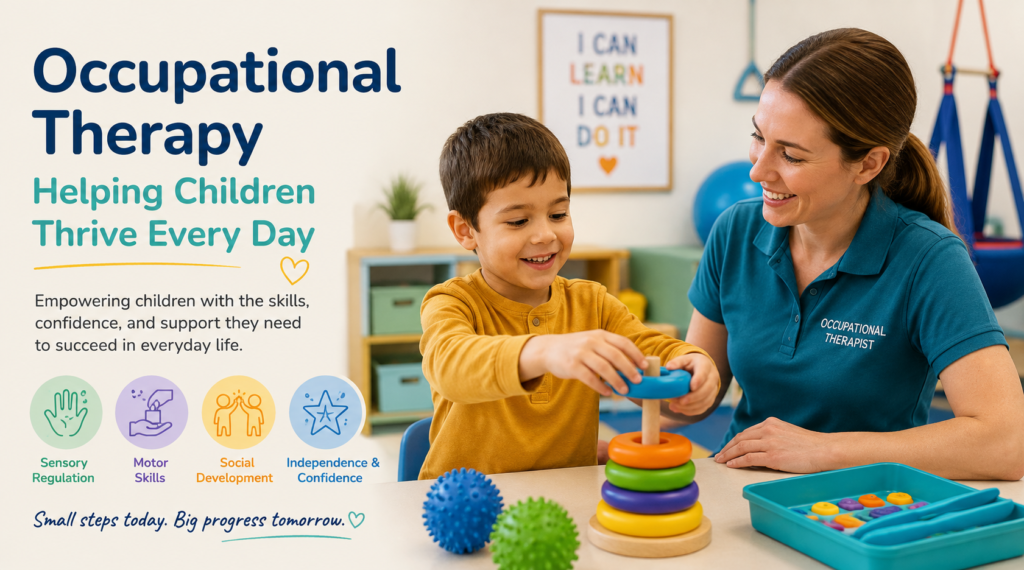
Occupational Therapy (OT) is a client-centered health service that helps individuals overcome physical, emotional, and social challenges that affect everyday functioning. For children, occupational therapy involves the clinical design of intervention programs that support kids with special needs in improving their functional abilities and becoming more independent in their daily living activities.
As awareness of developmental and sensory conditions grows, more parents are turning to pediatric occupational therapy to help their children reach important milestones, build confidence, and participate more fully in everyday life.
What Is Pediatric Occupational Therapy?
Pediatric occupational therapy is a specialized branch of OT focused on children. It uses play-based, structured activities to help kids develop the physical, cognitive, and emotional skills they need for daily life — from getting dressed and eating independently to writing, socializing, and regulating their emotions.
A licensed occupational therapist evaluates each child individually and creates a personalized treatment plan based on their specific needs, strengths, and goals.
How Occupational Therapy Improves Quality of Life
Occupational therapy plays an important role in building confidence and supporting overall personality development in children. Through consistent, guided sessions, children develop:
- Emotional regulation — learning to manage frustration, anxiety, and big feelings in healthy ways
- Sensory processing abilities — helping the brain interpret and respond appropriately to sensory input
- Relationship-building skills — improving communication and social interaction with peers and family
- Proprioceptive awareness — developing a better sense of body position and movement
- Object-handling abilities — strengthening grip, coordination, and manipulation of everyday items
- Language skills — supporting communication development alongside speech therapy when needed
- Self-care skills — building independence in dressing, feeding, hygiene, and other daily routines
Conditions That Benefit from Occupational Therapy
OT significantly improves the quality of life for children with a wide range of developmental and physical conditions, including:
- Autism spectrum disorder (ASD)
- Delayed developmental milestones
- Down syndrome
- Sensory processing disorder
- Spina bifida
- Cerebral palsy
- Hearing impairment
- Visual impairment
- Multiple disabilities
Each condition presents unique challenges, which is why individualized OT treatment plans are so important for meaningful, lasting progress.
Key Areas Addressed in Pediatric Occupational Therapy
In pediatric occupational therapy, several core developmental areas are addressed:
- Sensory Processing — helping children respond appropriately to sound, touch, light, and movement
- Fine Motor Skills — supporting tasks like writing, buttoning clothes, and using utensils
- Gross Motor Skills — building strength, balance, and coordination for movement and play
- Activities of Daily Living (ADLs) — developing independence in dressing, eating, and hygiene
- Cognitive Skills — improving attention, memory, problem-solving, and planning
- Social Skills — encouraging turn-taking, communication, and peer interaction
Why Early Intervention Matters
The primary goal of occupational therapy is to enhance a child’s functional abilities so they can perform daily activities more independently. Research consistently shows that early intervention leads to better long-term outcomes — the earlier a child begins therapy, the more effectively OT can support brain development and skill-building during critical growth periods.
Final Thoughts
Occupational therapy offers children with special needs the tools, confidence, and support they need to thrive — not just in therapy sessions, but in everyday life. Whether your child is working on sensory regulation, motor skills, or social development, a personalized OT plan can make a meaningful difference in their independence and overall well-being.
If you’re considering occupational therapy for your child, consult a licensed pediatric occupational therapist to discuss an individualized evaluation and treatment plan.