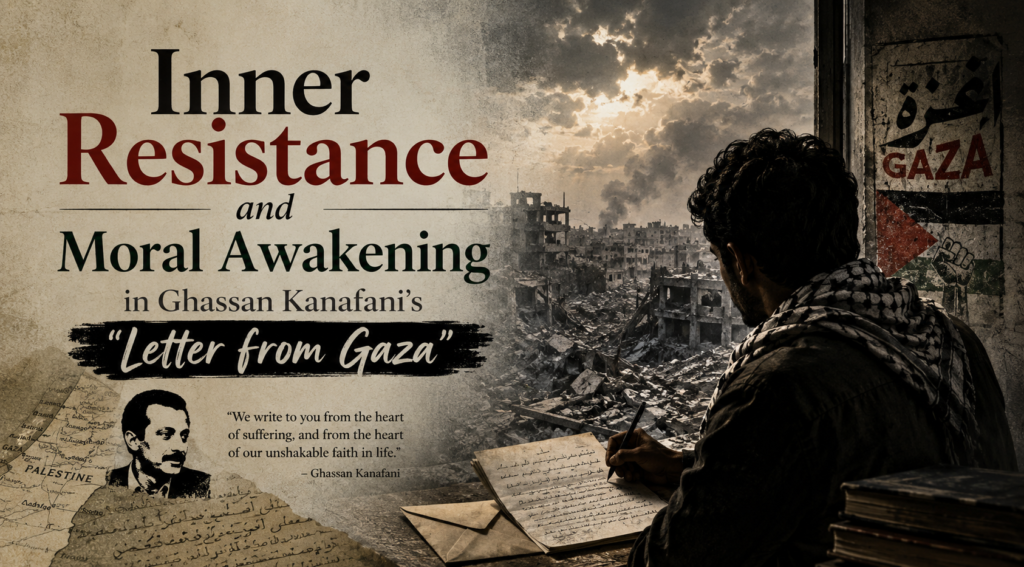
Caught in chaos, war often forces people to flee, pushing authors shaped by battlefields to weave both themes into their work. Shattered routines become stories showing how politics breaks lives, urging us to wrestle with duty, fairness, and staying alive. Take Ghassan Kanafani’s Letter from Gaza, a sharp glimpse into such writing. Life hums uneasily there, under constant threat; at first, the main character dreams only of escape, chasing shelter somewhere far away. Still, when he sees how war breaks a child close to him, something shifts inside. He chooses to stay in Gaza instead of leaving. Reading Kanafani’s tale brought back memories of Manto’s Khol Do, written during India’s Partition. Though worlds apart, both stories grow out of lives torn by chaos and loss. They stir deep feelings in quiet ways. But unlike others, the fight in Kanafani’s work happens mostly within the mind of the one telling it. As that voice changes, so does our understanding. Pain becomes visible through small turns of thought. The weight of what Palestinians endure slips into view, not shouted, but shown.
Furthermore, this note from Gaza takes shape as words sent to a friend now far away, living beyond Palestine’s borders. Right at the start, the writer holds onto a similar plan: getting out, just like so many others caught in places torn by conflict. Thoughts of studying somewhere safer begin to grow, fed by longing for steadier ground beneath his feet. Moving away feels less like escape, more like breathing space opening after years pressed against chaos. Safety isn’t shouted about it hums quietly under each reason he considers going. Distance from bombings doesn’t sound dramatic; it sounds like sleep without thunder. The idea sticks because calm does not come easily here. Beyond the door, just moments before stepping away, the man walks into his house. There he sees Nadia his brother’s little girl changed forever since the bomb dropped from an Israeli plane. When it hit, she threw herself over her younger brothers and sisters. Her legs are gone because of what she did. That sight pulls something loose inside him. The weight of her broken frame drags his thoughts down a path he had long avoided. Staring at her small shape, pieces start shifting under his skin. Running now feels less like freedom and more like turning his back on those who carry Gaza’s past in their bones (Kanafani).
Wounded, Nadia stands like a mirror held up to what war has done to her people. Not just one person’s pain shows in her broken form it carries everyone’s ache. Seeing her there, the narrator feels his wish to leave begin to crack under weight of truth. That instant something shifts inside him, where running away now looks like turning away. To step back from Gaza is to lose touch with how others endure, resist, keep going.
When the injured body stands for harm done, it brings back feelings tied to Saadat Hasan Manto’s Khol Do, a tale showing what happened when India split apart. In his work, the broken form of the girl named Sakina shows plainly how refugees suffered amid group-driven rage. Though some say Manto’s version of Partition captures society losing its mind where right and wrong fade beneath waves of anger and force (Alter 94) others see deeper patterns. What happens to Sakina uncovers just how far people can go toward each other when systems shake loose in chaos. Still, in Kanafani’s tale, physical injury plays another part entirely. Where Manto shows broken bodies to expose a rot in the culture, Kanafani turns Nadia’s hurt flesh into something that stirs conscience. The man telling the story doesn’t just see pain he finds himself pulled toward seeing where he stands amid Gaza’s struggles. Those marks on her skin? They insist when you face unfairness, looking away won’t do. One way out seems clear at first distance from Gaza feels like sense made real.
Moving away holds promise, a chance to grow beyond chaos where safety keeps failing. A new place could mean work, maybe peace, things hard to find back home. Anyone stuck in endless shaking would want that much. But then there she is: Nadia shifts the ground beneath his thoughts. Out here, walking away isn’t just about moving somewhere else. It drags along the weight of turning your back on what everyone has lived through. Staying in Gaza shifts into something heavier than choice. It settles into duty, quiet and unasked for.
Inside the narrator’s mind, Kanafani frames the choice as quiet defiance. Not through protest or clash with power, but something shifting beneath the surface. He turns away from what he once believed his dreams, his route out. That urge to flee? It quietly echoed surrender, shaped by pressures on Palestinian life. Staying becomes refusal not of danger, but of leaving others behind. Staying put in Gaza turns into a quiet statement: duty matters more than ease. Here, resistance takes shape not through force, yet through inner reckoning reshaping how one stands within the community. Kanafani frames defiance as something felt, not fired.
Not far into the tale sits the weight of spoken truth. A message shaped like a note draws lines between people still in Gaza and others now living elsewhere. Words on paper act like anchors, holding moments that might otherwise slip away. This form gives shape to what feels right or wrong about what eyes have seen. From one person to another flows an effort to say why paths must split, why staying differs from leaving. Writing gives Kanafani a way to stretch private thoughts into something louder, more public. From quiet observation rises an account shaped by exile and conflict. His voice travels beyond one listener – aiming instead at bearing witness. What begins as conversation becomes evidence. Words shift their purpose once spoken on paper. A single note grows weight through context. In between lines sits what cannot be said plainly.
Stories for Kafani, carried weight far beyond pages – each word leaned into resistance. Because he saw writing not apart from politics, but tangled within it. His novels, reports, even sketches functioned like warnings, reminders, awakenings. One scholar points out how deeply he believed creative work could stir people long silenced. Instead of escape, his fiction offered confrontation – a mirror held up to loss, then defiance. Take Letter from Gaza: what seems private soon reveals itself as shared burden. Though quiet on the surface, its core hums with refusal to leave, to forget, to look away. The choice to stay, written in plain terms, echoes louder than speeches might. That figure standing amid ruins? He stands not alone, but alongside others shaped by siege and scattering. Meaning pools slowly: presence here is protest.
Change in the tale shows what Kanafani thought: thinkers cannot look away when politics shape lives. From silent watcher to someone who feels duty, the main character moves like people ought to move when their nation suffers. Not just showing bloodshed as something sad, it asks how seeing wrongs pulls you into doing right. Choosing to remain in Gaza, the narrator understands – what one does ties tightly to shared past and resistance (Coffin 106).
Lastly, Letter from Gaza centers on how one person’s sense of right ties into larger duties shaped by politics. Inside, the main character wrestles with a choice common to those under pressure – pull away to stay safe or stand where things hurt. Connection sparks understanding, Kanafani implies, once people see their path runs alongside others’. Instead of fleeing, staying becomes an act of unity. Doubt shifts, then hardens, not into answers but resolve.
Quietly, resistance shows up not in loud clashes but in still thoughts. Instead, it grows when someone pauses to weigh what is right about their actions. Staying in Gaza that choice by the storyteller marks one of those turning points. At first just words on paper meant for one person, it shifts into something heavier: an acceptance of duty toward people barely holding on amid chaos and loss. Slowly, the note changes shape, rising above mere pain to ask hard questions about what seeing wrongs requires of us afterward.
From here, resistance takes shape not through grand gestures, but quiet inner resolve passed down like old photographs. Though surrounded by chaos, people still hold power to reshape how they see the past, simply by what they decide to do next. Instead of running, the voice in the tale stays, linking personal courage to wider belief: stories might stir more than thought – they prompt action. Without shouting, the piece pulls light onto tangled truths behind defiance, nudging those who read it to notice where they stand when others suffer.
Works Cited (MLA)
Alter, Iska. Madness and Partition: The Short Stories of Saadat Hasan Manto. 1994.
Coffin, Nancy. “Engendering Resistance: The Works of Ghassan Kanafani.” 1996.
Kanafani, Ghassan. Letter from Gaza.