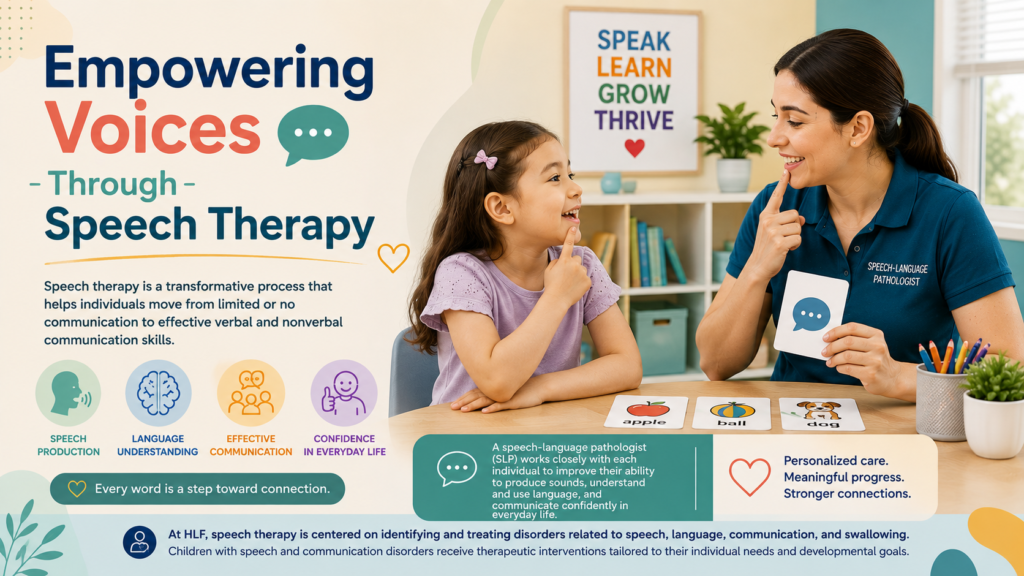
Speech therapy is a transformative process that helps individuals move from limited or no communication to effective verbal and nonverbal communication skills. A speech-language pathologist (SLP) works closely with each individual to improve their ability to produce sounds, understand and use language, and communicate confidently in everyday life.
At HLF, speech therapy is centered on identifying and treating disorders related to speech, language, communication, and swallowing. Children with speech and communication disorders receive therapeutic interventions tailored to their individual needs and developmental goals.
What Is Speech Therapy?
Speech therapy, also known as speech-language pathology, is a specialized form of treatment designed to help children and adults overcome challenges with speaking, understanding language, and social communication. A trained speech-language pathologist evaluates each child’s specific needs and creates a personalized treatment plan to build their communication skills step by step.
Approaches Used in Speech Therapy
Speech therapy uses a range of diversified approaches to foster communication capabilities, including:
- Articulation therapy — helping children produce speech sounds clearly and accurately
- Fluency and voicing — addressing stuttering, pacing, and vocal quality
- Social communication — building skills for conversation, turn-taking, and understanding social cues
- Augmentative and Alternative Communication (AAC) — using tools and devices to support communication for children with limited verbal speech
Speech Therapy for Feeding and Swallowing
Beyond communication, speech-language pathologists also work on swallowing and feeding difficulties. This aspect of therapy helps improve quality of life, minimize discomfort, and reduce health risks associated with feeding challenges — an often-overlooked but essential part of pediatric speech therapy.
Why Early Intervention Matters
Early and targeted speech therapy helps restore function, prevents frustration and isolation, and equips children with practical strategies for communicating in everyday personal and social situations. Research shows that the earlier a child begins therapy, the more effectively they can build lasting communication skills during key developmental windows.
The Goal of Speech Therapy
The ultimate goal of speech therapy is to help each child achieve greater independence, self-respect, and confidence. By building strong communication foundations, therapists empower children to express themselves, connect with others, and participate fully in personal and social situations.
Final Thoughts
Speech therapy gives children the tools and confidence they need to find their voice — literally and figuratively. Whether a child is working on articulation, social communication, or feeding challenges, a personalized speech therapy plan can make a lasting difference in their ability to connect with the world around them.
If you’re considering speech therapy for your child, consult a licensed speech-language pathologist to discuss an individualized evaluation and treatment plan.